
Winter Mechanical Dredging of a Stormwater Pond Forebay
Prepared By: Toronto and Region Conservation Authority (TRCA)
Introduction
Stormwater management ponds have been widely implemented since the 1990’s to detain and remove pollutants from urban stormwater runoff. Their primary means of water quality improvement occurs through settling of pollutant-laden sediment under low turbulence conditions. Sediment removal efficiency decreases with pond age due to the accumulation of sediment that displaces pond volume available for treatment. As a result, stormwater ponds need to be dredged periodically in order to restore their storage capacity and their ability to retain sediment and associated contaminants coming in from the contributing drainage area.
Dredging of stormwater ponds is generally considered to be a seasonal activity, and often occurs towards the late summer months when the water level is at a minimum and evaporation is high. However, pond cleaning activities can take place year-round. Under the right conditions, winter operations have particular advantages that could result in less laborious and more cost-effective project outcomes. This case study highlights the process involved in winter operations that utilize mechanical dredging for cleaning a pond forebay.
Pond Profile
| Municipality | Town of Whitchurch-Stouffville |
| Cleanout Party | SCS Consulting |
| Drainage Area Land Use | Residential |
| Pond Age at Time of Cleanout | 8 years |
| Drainage Area (ha) | 14.55 |
| Permanent Pool Depth (m) | 1.85 |
| Permanent Pool Volume (m3/ha) | 179 |
| Water Quality and Erosion Control Volume (m3/ha) | 217 |
| Sediment Removal Method | Mechanical Dredging |
| Sediment Handling Method | Landfill Disposal |
Project Objectives
The primary objective of any pond cleanout operation is to remove the sediment that has settled and accumulated at the bottom of the stormwater pond. Timely maintenance will significantly decrease the potential liability to the land owner (often the municipality) by ensuring the presence of the flood protection and water quality enhancement functions for which they were originally designed.
The developer, Geranium Corporation, contracted the cleanout of stormwater pond RC5 to Griffith Property Services, (administered by SCS Consulting Group Ltd.) to be completed during the winter of 2013-2014 for the purpose of assumption by the Town of Whitchurch-Stouffville. Based on a pre-cleaning bathymetric survey conducted by SCS Consulting in July 2013, it was estimated that 120 m3 of accumulated sediment needed to be removed from the sediment forebay in order to restore the pond to its original design storage capacity prior to assumption by the Town. In addition to the primary objective of removing this accumulated sediment for pond assumption, the pond cleanout project was also undertaken to meet the following objectives:
- Prevent the release of sediment to the receiving stream;
- Repair and re-instate the pond forebay berm back to design elevations;
- Remove any dead vegetation that has impaired the functionality of the pond;
- Re-plant pond banks and restore any other areas where vegetation removal was required for maintenance access;
- Complete dredging and associated activities on schedule;
- Complete dredging and associated activities on budget.
Site Description
The RC5 pond in the Town of Whitchurch-Stouffville is located east of Highway 48, south of Bethesda Sideroad and north of Stouffville Road. The pond was constructed in 2006 as part the Northwest Stouffville Secondary Plan lands that incorporate approximately 385 ha of land. These lands are within the Rouge River watershed and drain to the Little Rouge Creek and the Stouffville Creek. The RC5 pond is servicing the Geranium Residential Development and outlets to the Little Rouge Creek. A 14.55 ha drainage area feeds residential stormwater runoff to the RC5 pond with a normal surface area of 2489 m2 (Figure 1). The pond design includes two access roads at the northeast and southwest corners.
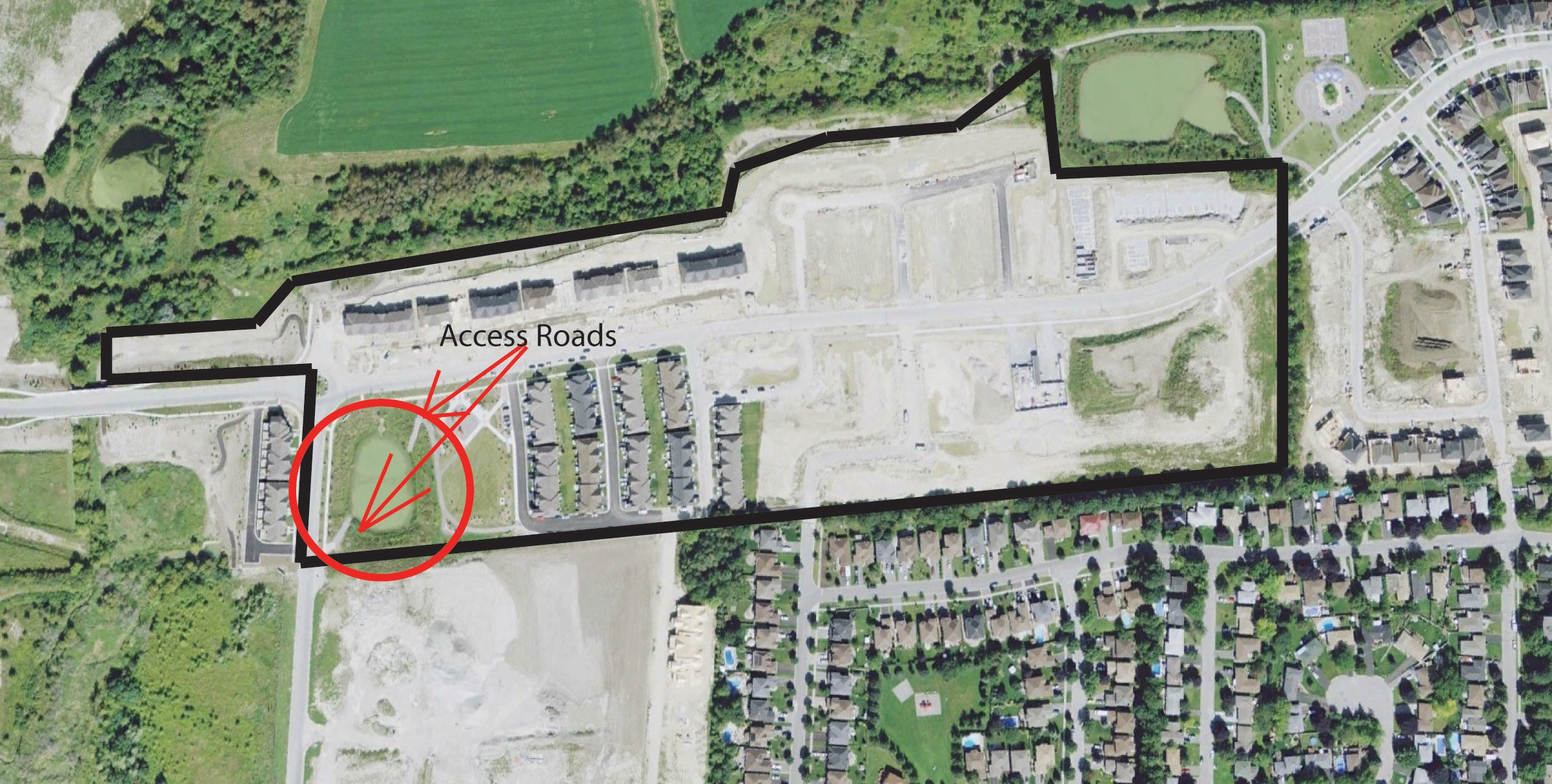
Figure 1. Location of Stouffville RC5 pond and associated drainage area. Aerial photo was captured prior to completion of the planned development.
Methods
The pond maintenance was scheduled during the winter months and ultimately took place in February, 2014 during subzero temperatures. The timing of the project ruled out the possibility of utilizing hydraulic dredging for this operation, and mechanical dredging was thus implemented. One of the sought-after advantages of cleaning the pond during the winter was to mechanically remove water in its solid state rather than pumping the full volume of water. The cold winter of 2013-2014 cooperated with the planned dredging operations. Long range weather reports were monitored in advance of project commencement to select a time frame suitable for this work.
Pond Survey
The pre-cleaning bathymetric survey conducted by SCS Consulting took place in July, 2013. A Trimble R8 model GPS device was used to obtain high resolution pond bottom measurements with a 15 mm vertical accuracy (Figure 2). The device was attached to the top portion of a metal rod with a flat metal plate feeding into the bottom of the rod. A GPS reading was taken when the disk reached and rested on top of the sediment. The original as-built survey was overlayed with the existing bathymetric survey, and the difference between the two measurements was used to determine the existing pond sediment volume. To increase the efficiency of the method, the as-built bathymetric survey was uploaded to the GPS device, which compared the live feed of GPS points to the uploaded as-built survey. This allowed the survey technicians to concentrate their measurements in areas that showed large depth deviations between the two surveys. This process increased the accuracy of the survey by isolating the sediment accumulation hot spots, capturing key pond contours and structures, and diverting efforts to those locations. Based on the survey, it was estimated that 120 m3 of sediment had to be removed from the RC5 pond. The entire volume was found to be concentrated in the pond sediment forebay area, eliminating the need to dewater and dredge the aftbay of the pond.
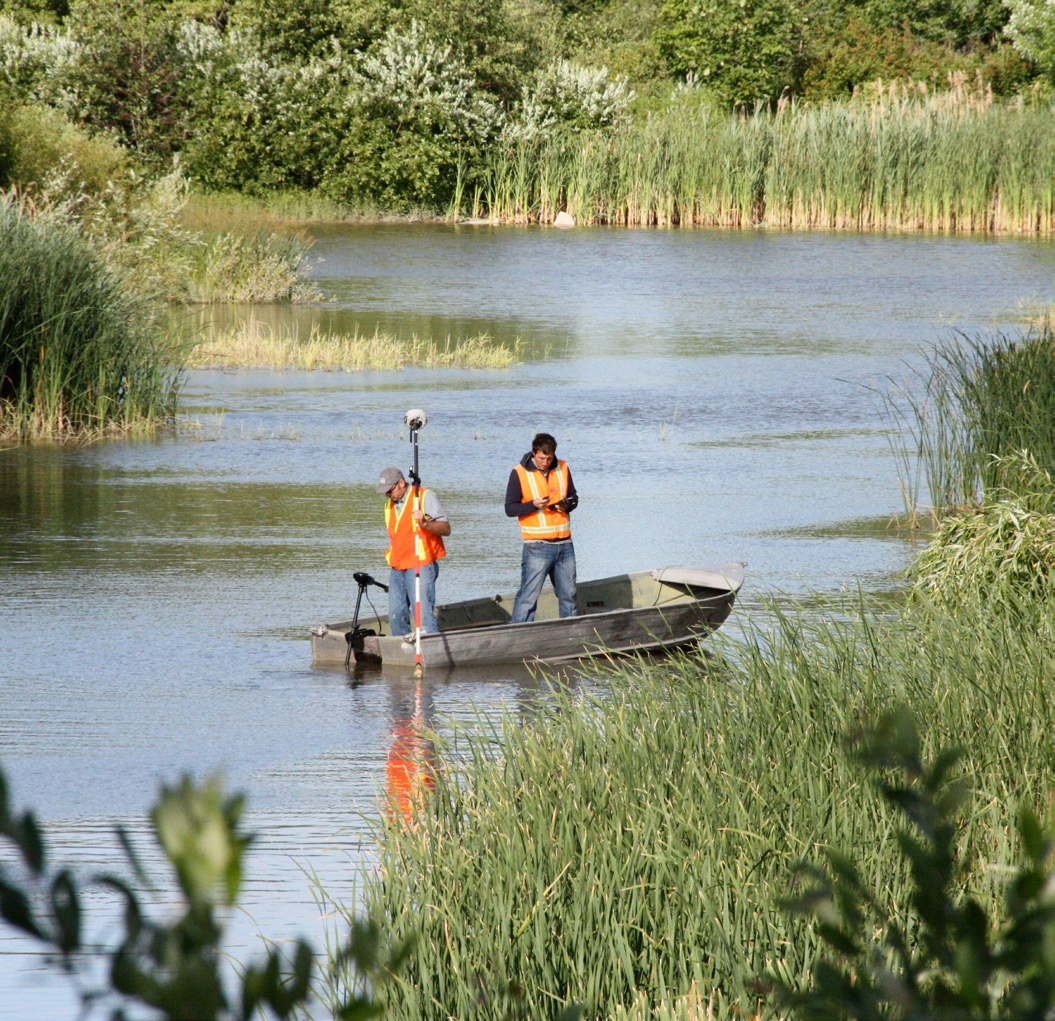
Figure 2. Bathymetric survey of a pond using a rod, disk and a GPS unit.
Sediment Characterization
Sediment samples were obtained on December 4, 2013. One grab sample was obtained from the north end of the pond adjacent to the headwall, and the other grab sample was obtained at the south end of the pond. Samples were submitted to AGAT Laboratories in Mississauga, Ontario and analyzed for metals, inorganics and petroleum hydrocarbons (F1-F4). The objective of this sediment testing was to compare contaminant levels to the Ontario Ministry of Environment’s Soil, Ground Water and Sediment Standards for Use Under Part XV.I of the Environmental Protection Act (2011). Based on whether the sediment contaminant levels exceeded these standards, options for disposal or re-use of sediment could be considered and cost estimates for the alternative options could be compiled.
Results of this sediment quality analysis showed that contaminant levels met the thresholds in Table 1 of the Soil, Ground Water and Sediment Standards for residential, parkland or institutional property. As such, the material was considered inert and could be re-used on offsite if a receiving site was available.
Site Preparation
The stormwater pond had been designed with two access roads, which improved the site access and preparation process (Figure 3). As these roads had not been in use for an extended period of time, some regrading and snow clearing was required to ensure that the machinery had a safe and stable access route. The timing of the dredging operations nearly eliminated the need for vegetation clearing to ensure clear access for equipment.
A single geotextile filter bag was placed over a nearby drain that joins to the pond outlet. Site preparation also included the installation or placement of equipment required for the project such as pumps, hoses and heavy machinery.
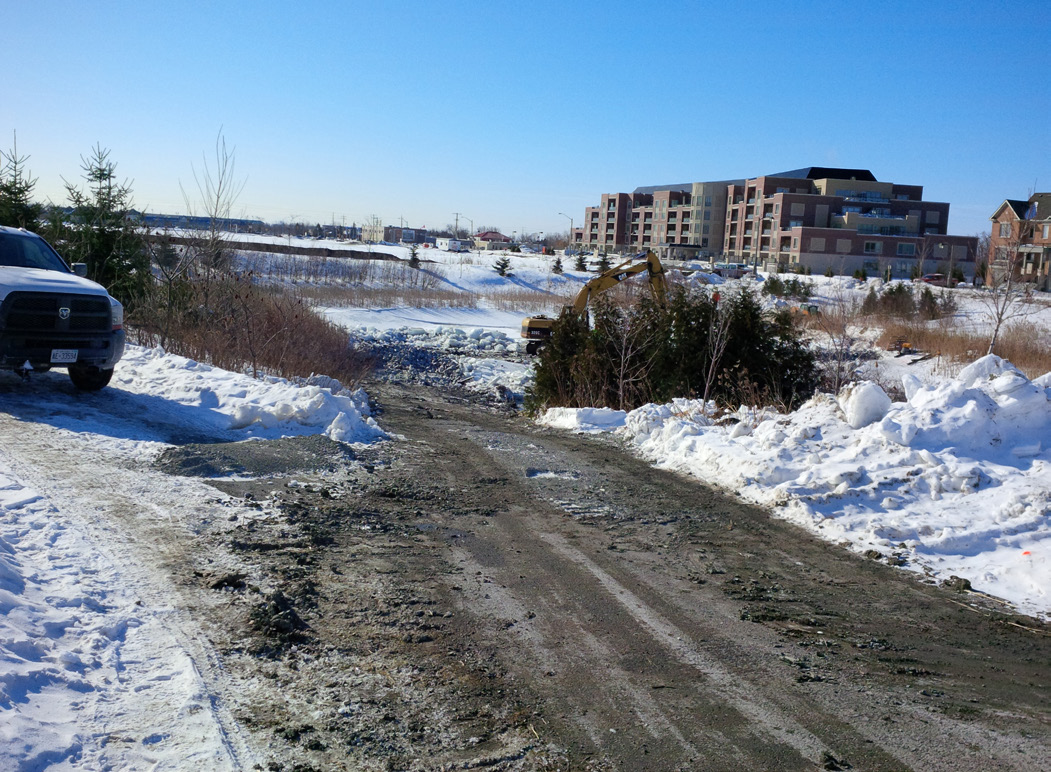
Figure 3. Access road snow clearing and grading prior to pond dredging.
Dewatering and Dredging
Unlike hydraulic dredging, mechanical dredging requires that the maximum possible amount of water is removed from the pond before dredging operations begin. Due to the timing of operations and relatively cold winter, the pond had frozen almost to the bottom, resulting in an ice layer that was 375 mm thick, leaving very little water that needed to be pumped (Figure 4). A hole was punctured in the ice through which a 3” pump nozzle was inserted. The pumped water was directed to a 4 m2 geotextile sediment bag, which retained less than 0.1 m3 of sediment. Filtered water from the bag was directed back into the aftbay of the pond. The frozen layer of ice restricted the generation of turbulence in the pond, thereby allowing the sediment to settle to the bottom. This resulted in relatively clean discharge from the outlet, as suspended sediment was minimal.
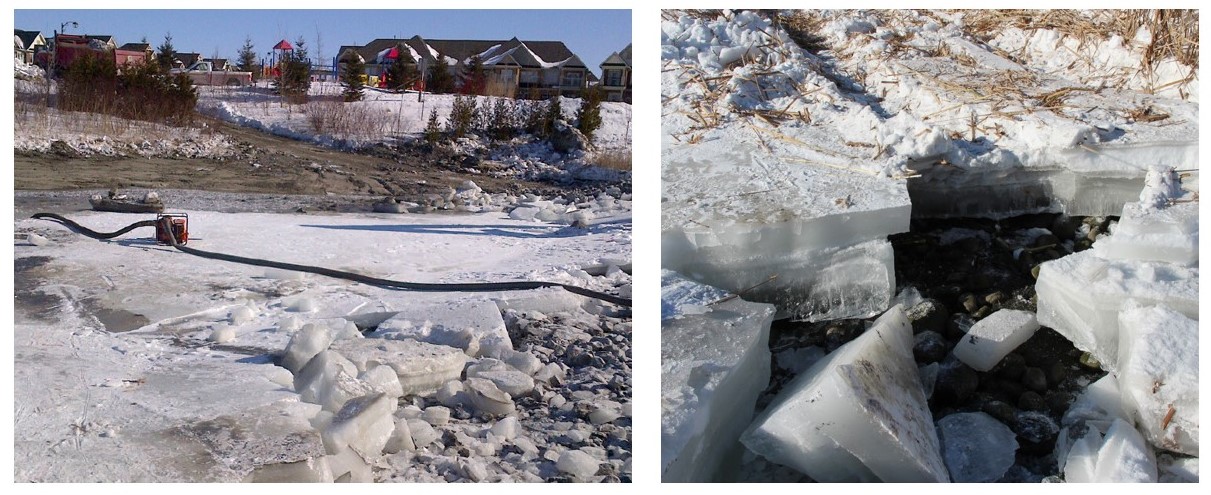
Figure 4. Pumping of sediment forebay water through the ice layer (left) which was 375 mm thick (right).
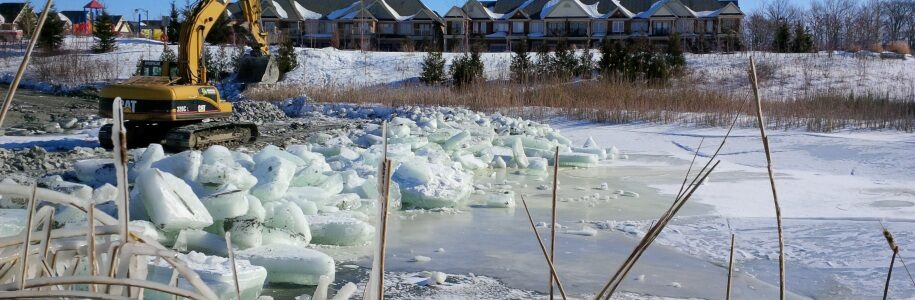
The ice removal and dredging activities were conducted simultaneously; the excavator moved further into the center of the forebay after removing the ice and dredging newly exposed sections (Figure 5). A CAT 330 excavator was used to break the forebay ice into chunks and move them into the aftbay area of the pond. The frozen state of the water made the work easier as it allowed the ice to be moved around as a solid material. The ice remained in the aftbay until warmer spring weather redistributed the meltwater throughout the entire pond.
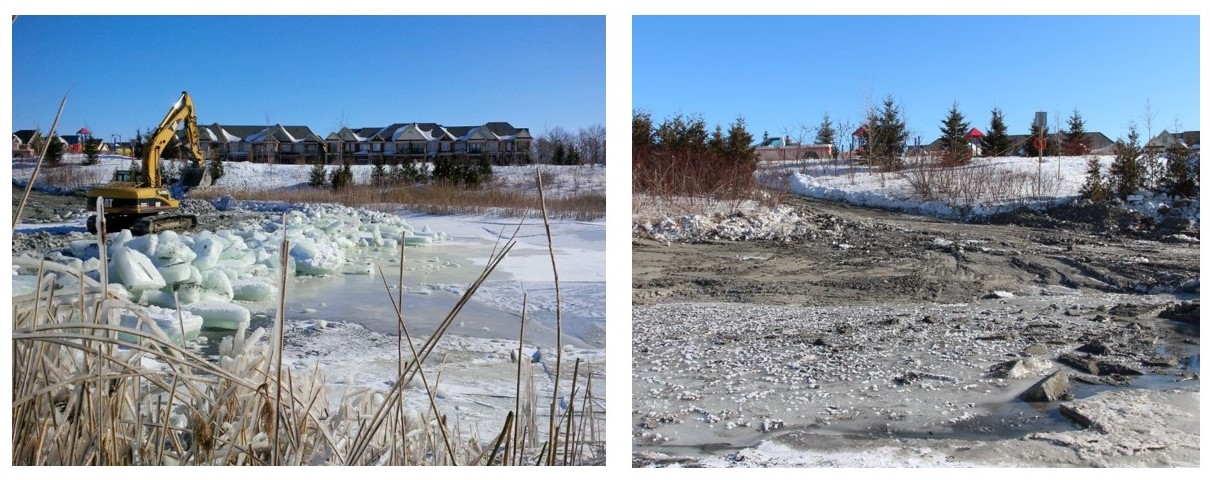
Figure 5. Ice break-up and removal by a mechanical excavator (left); exposed pond sediment forebay bottom after ice has been removed and some sediment had been dredged.
The same excavator was used to dredge the nearly frozen pond bottom sediment from the pond sediment forebay area. The lack of vegetation and cattails at the perimeter of the pond allowed the excavator to freely move around the edges of the forebay and work its way towards the center without sinking into pond muck. When the excavator reached about 2/3 of the way to the center of the forebay, it was estimated that the required amount of sediment had been removed from the pond.
Sediment Hauling and Disposal
The removed sediment was left in 20 m3 stockpiles near the north access road and left to drain and freeze overnight, eliminating the need for bulking material. The following day, the frozen material was hauled on dump trucks. A small amount of completely dry material was imported and used to seal the trucks tail gates to prevent spillage during transportation. The sediment was hauled away in approximately 12 truckloads and transported for re-use at another of the contractor’s construction sites. The location was chosen by the contractor due to the site fill requirements and proximity to the pond (12 km).
Site Restoration
Given the time of year when the dredging was conducted, the presence of vegetation did not introduce a major obstacle to the process. A number of cattails were removed at the banks of the pond for ease of access. The presence of two access roads eliminated the need to cut down any trees, which ultimately minimized the site restoration activities. Some re-grading of the access roads was necessary to ensure the optimal function and safety of the pond perimeter and ease of future access.
Results
The dredging of the Stouffville RC5 pond was carried out successfully and as planned. Assumption of the pond took place at the end of the first growing season to ensure that the facility functioned properly and had been adequately restored. The following summarizes the success of the project relative to its objectives.
Removal of 120 m3 of sediment
The initial estimated volume of sediment to be removed based on the pre-dredging bathymetric survey was an accurate estimate of the actual amount of removed sediment. However, it is important to note that the dredging operations were discontinued once the intended volume of sediment had been dredged, which leaves little room for discrepancy between the estimated and actual volume of sediment. SCS Consulting conducted a post-dredging survey to ensure that the actual amount of sediment had been removed from the pond and its storage volume had been restored.
Completion of the project on schedule
The project was completed earlier than scheduled, mainly due to favorable weather needed for winter pond dredging operations. The temperatures remained at subfreezing levels during the process, ensuring that ice chunks could be easily mobilized to their intended locations. No seepage occurred, little water needed to be pumped, and minimal flora disturbance was necessary.
Completion of the project on budget
The project was completed on budget (Table 1), due to favourable weather conditions and expected volume of dredged sediment. The lack of water seepage and rain during the period ensured that pumping was not prolonged more than necessary.
Improved Pond Functioning
The berm separating the sediment forebay and aftbay was restored and elevated by 20 cm to improve the overall pond functioning. Additionally, the removed sediment restored the original pond design storage volume, ensuring that the pond provides satisfactory flood control and water quality functions.
Table 1. Actual project costs for dredging 120 m3 of sediment from the Stouffville RC5 pond. Costs are expressed as $ per m3 of removed sediment.
| Category | Cost (per m³ of removed sediment) | Details |
|---|---|---|
| Preliminary assessment | $50.00 | • Topographic and bathymetric survey of pre- and post-dredging conditions. • Review site information to determine the type and amount of work required. • Calculate sediment volumes and test quality to assess contamination. |
| Site preparation | $10.00 | • Clearing of vegetation as needed. • Install erosion and sediment controls, fencing, snow clearing, and re-grading of access roads. • Installation of equipment (e.g., pumps, hoses). |
| Dredging and dewatering | $20.83 | • Equipment, labor, and supplies. |
| Hauling | $20.83 | • 120 m³ of sediment hauled 12 km. |
| Disposal | $20.00 | • Sediment hauled to the contractor’s reuse site. |
| Site restoration | $6.67 | • General site cleanup and removal of fencing. • Re-grading, pond bank seeding, and installation of erosion control blankets. |
| Project Total | $128 |
Challenges and Lessons Learned
Overall, the project was conducted as planned, mainly due to the suitable weather during the scheduled cleanout period. Since the cleanout of the RC5 stormwater pond was conducted during the winter, an anticipated challenge for the workers was the cold weather and shorter working days. Additionally, the pump did not operate adequately and the hose froze on multiple occasions due to persistently frigid weather. The winter conditions also presented a slip and fall hazard, which was minimized through a harness worn by each worker.
Despite the challenges outlined above, conducting pond cleanout operations during the winter comes with many advantages, mainly associated with the frozen state of the water. The frozen pond water volume was easily removed from the forebay and placed within the aftbay, eliminating the need to pump large volumes of water into the receiving creek. Since nearly all sediment had settled out during the freezing process, the decision to leave the chunks of ice in the pond to eventually melt did not pose a risk of reintroducing sediment into the pond after the dredging was finished. The ice formation and sediment settling resulted in minimal suspended sediment retention within the geotextile bag during the pumping of the remaining water. The cold temperatures also resulted in minimal mud tracking and required restoration due to the frozen ground surface and sediment, which allowed the machinery to move around and within the pond bed. The cold weather also contributed to a nearly frozen state of the dredged sediment after settling overnight, eliminating potential slump test issues during hauling. Removal and restoration of vegetation was not an issue since the cleanout was conducted during the winter. Finally, local residents are less likely to use their backyards and the location as a recreational facility during the winter months, which significantly reduces the chance of resident complaints about lack of access, noise, dust and smell.
This case study outlined numerous advantages of pond dredging operations during the winter. However, the success of such projects is highly dependent on the weather, which is beyond the control of the individuals undertaking those projects. Building in flexibility to allow operations to occur when long term forecasts indicate the presence of favourable weather conditions can help, but pond owners need to budget for contingencies, when despite best efforts, suitable weather conditions fail to materialize.
For information on STEP’s other stormwater management initiatives, or to access the new guidance
on stormwater pond cleanouts, visit us online at www.sustainabletechnologies.ca
This case study has been prepared by the Toronto and Region Conservation Authority’s Sustainable Technologies Evaluation Program. SCS Consulting Ltd. carried out the pond clean out project described herein, and as such provided the information and site access required for the development of this document. Funding support for this study was provided by Region of Peel, Region of York, City of Toronto and Government of Canada’s Great Lakes Sustainability Fund. The contents of this report do not necessarily represent the policies of the supporting agencies. For more information about this project, please contact STEP@trca.on.ca.
